

French Lessons for Patsy, from her father Thomas Jefferson
The letters tell a story of a Virginia girl who almost found a different life

ONE OF THE BEST AND WORST things about a big research project is that you wander around in archives, both physical ones and digital. You end up going down rabbit holes and getting completely distracted from the work you are supposed to be doing.
It’s glorious.
Last week, I found myself sifting through letters from Thomas Jefferson to his teenaged daughter, Patsy.
I got to Patsy because I’m working on a book about 18th-century French nuns, and Jefferson enrolled his daughter in a convent school when they lived in Paris. I don’t know if Patsy will end up in the final manuscript, but I sure am loving following her story. In the meantime, here are a few of the things I’ve found.
A scrap of paper and a lock of hair
Thomas Jefferson was famously in love with his wife, Martha. As she lay dying in 1782, the couple read together some of their favorite books and copied out this quotation from Tristam Shandy on a tiny scrap of paper about 4 inches square.
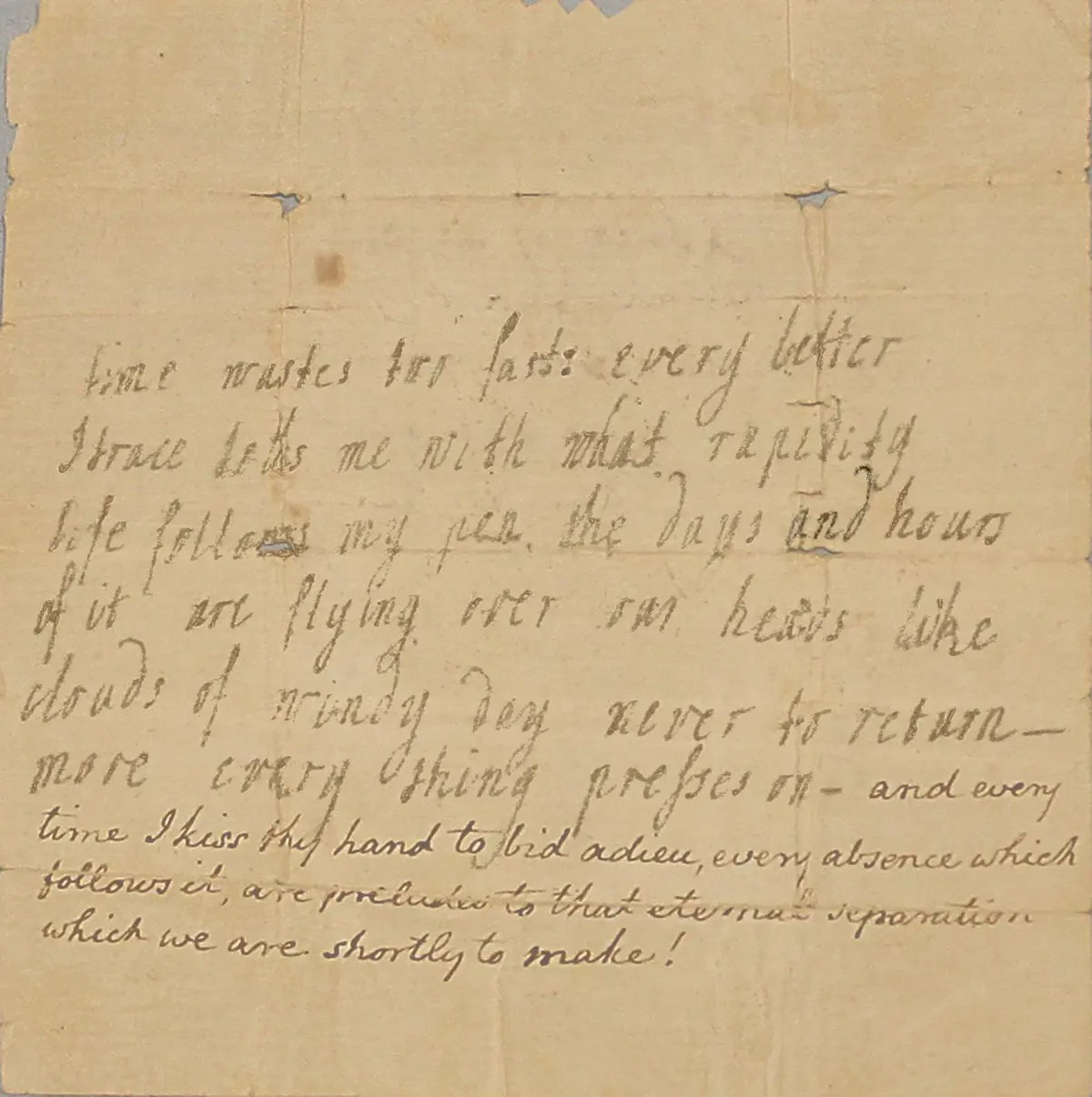
Martha wrote first (light ink, up top):
“Time wastes too fast: every letter / I trace tells me with what rapidity life follows my pen. The days and hours / of it are flying over our heads like clouds of a windy day never to return…”
Then, in a different ink, Jefferson finished up:
“and every time I kiss thy hand to bid adieu, every absence which / follows it, are preludes to the eternal separation which we are shortly to make!”
Jefferson rolled up the paper, wrapped it with a lock of Martha’s hair, and placed it in a drawer in a locked drawer in a table next to his bed.
It remained there for the rest of his life.
A daily schedule
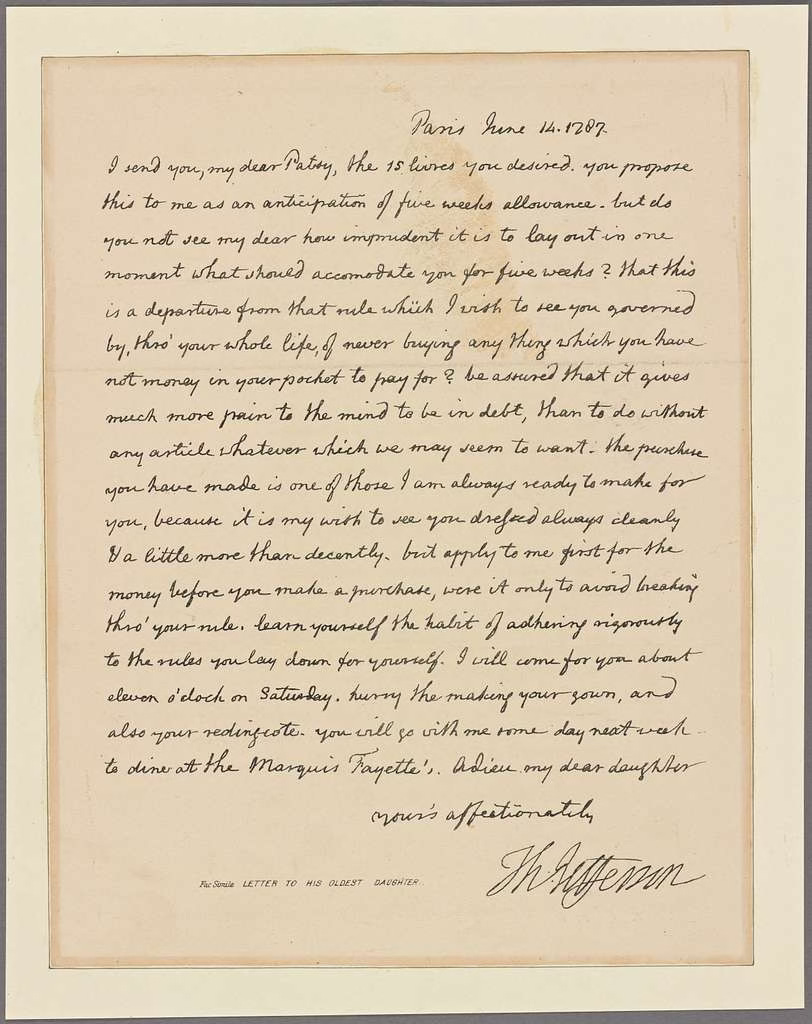
After Martha’s death, Jefferson took charge of the care of their children, including his eldest daughter, Patsy, who was just 10 years old. In November 1783, Jefferson wrote to Patsy, laying out what her ideal schedule should be, no doubt because young Patsy was proving less than diligent.
“With respect to the distribution of your time the following is what I should approve.
from 8. to 10 o’clock practise music.
from 10. to 1. dance one day and draw another
from 1. to 2. draw on the day you dance, and write a letter the next day.
from 3. to 4. read French.
from 4. to 5. exercise yourself in music.
from 5. till bedtime read English, write &c.”
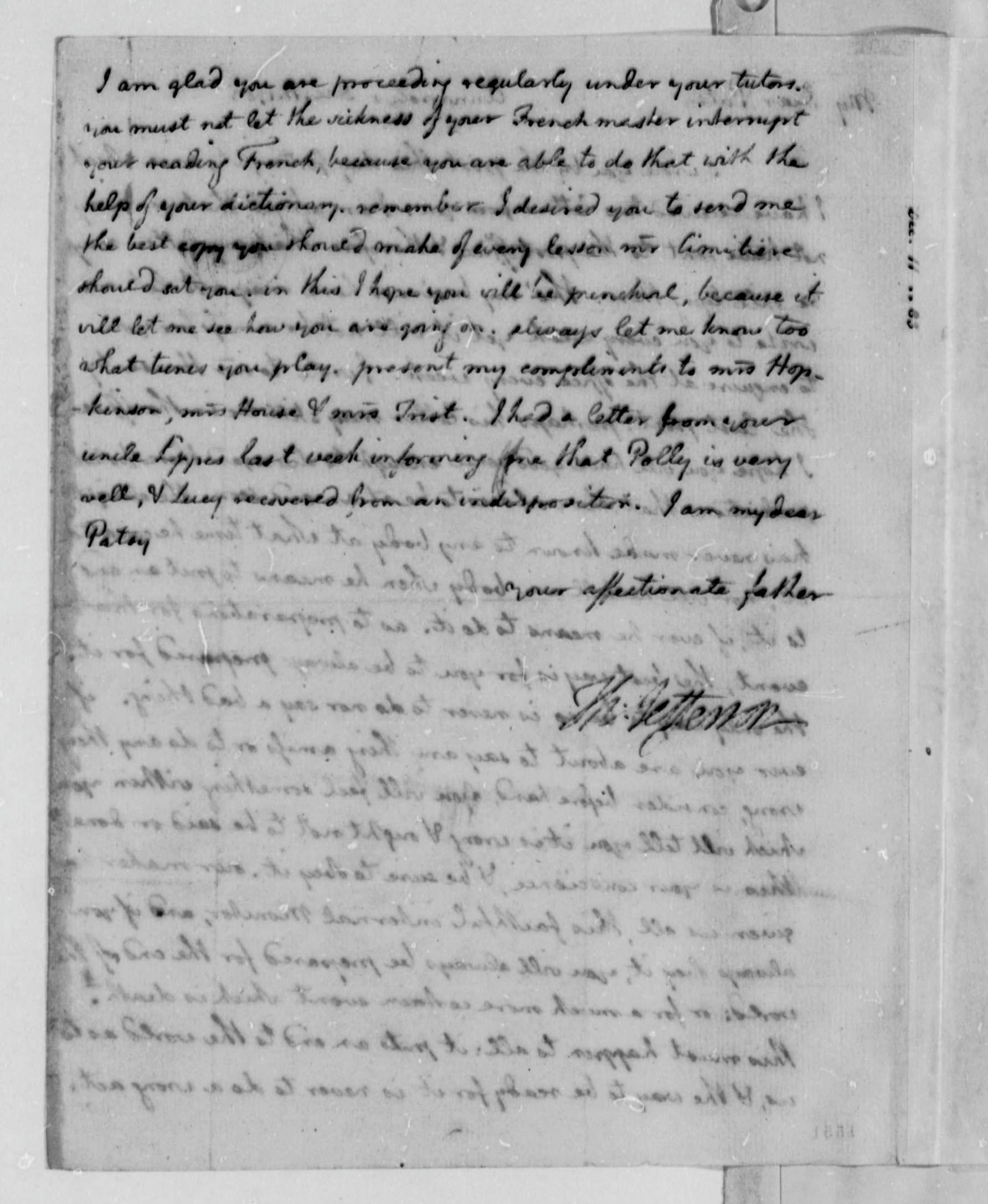
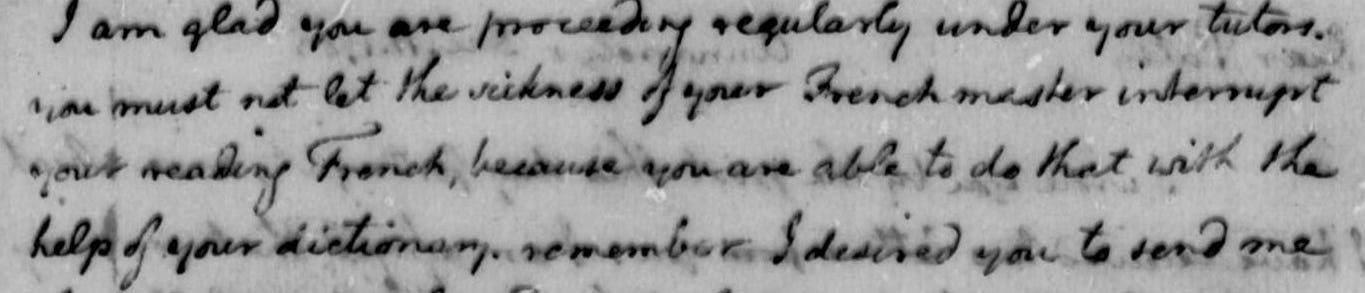
I’ve highlighted the part about French because Jefferson was insistent on this. Patsy clearly dawdled and made excuses because a few weeks later, on December 11, Jefferson wrote to her again:
“I am glad you are proceeding regularly under your tutors. You must not let the sickness of your French master interrupt your reading French, because you are able to do that with the help of your dictionary. Remember I desired you to send me the best copy you should make of every lesson Mr. Cimitiere should set you. In this I hope you will be punctual because it will let me see how you are going on.”
But when twelve-year-old Patsy arrived in France with her father in 1785, she wrote to a friend that both she and Jefferson were struggling because “Papa spoke very little French and me not a word.”1
Really, Patsy? Not one word? After all that reading, all those French tutors, all those specially-purchased dictionaries?
As a parent myself, I couldn’t help but sympathize with Jefferson and wonder if he thought he’d failed.
But, I’m also a former French professor and here’s what I suspect happened: Patsy panicked and clammed up, like many people do when they’ve learned a foreign language entirely in the classroom and then suddenly hear how it’s really spoken in the streets.
Asterisks in ink
Patsy would go on to become fluent in French, so fluent that when she eventually returned to the United States she had trouble speaking English. Soon after they arrived in France, Jefferson placed her in a Bernadine convent school known as the Abbey Royale de Panthemont. It was a kind of boarding school for the daughters of the elite. (And Jefferson, though a revolutionary, was certainly an elitist).
There, Patsy had a much richer education than Jefferson had ever envisioned for a girl, including astronomy and mathematics. The curriculum was specially designed by the convent’s brilliant abbess, Marie-Catherine de Béthisy de Mézières who believed in advanced education for girls.
Patsy also made friends - lots of them. This was an entirely different kind of friendship experience than she’d had in rural Virginia.
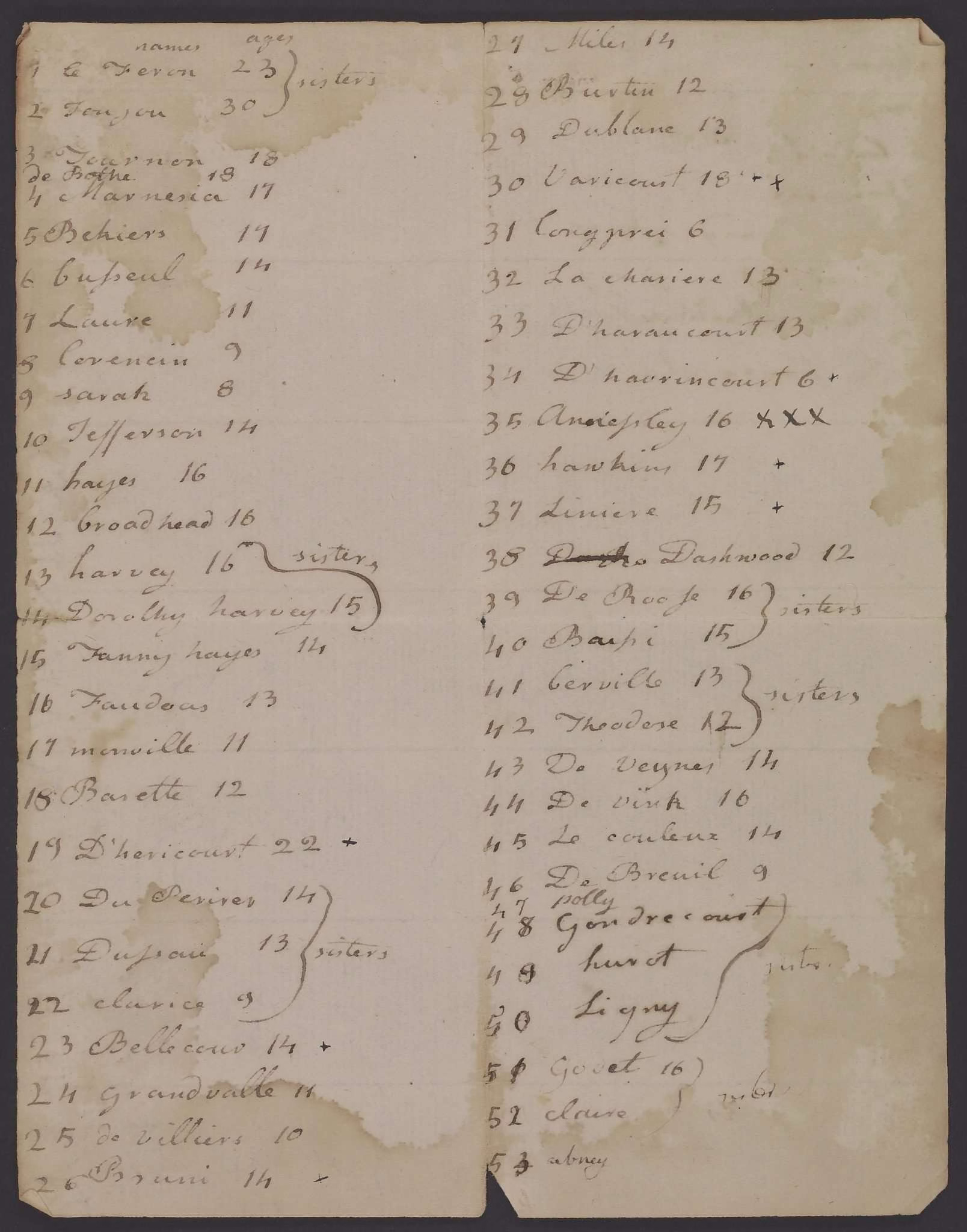
The smudged and water damaged paper above is a list of the girls who attended school in Panthemont with Patsy. The names of her close friends are marked with an asterisk. The ages of the girls are also included. This list seems to have been written by one of the nuns. Jefferson was interested in Patsy’s social life and clearly asked the nuns who she was friendly with.
Patsy loved her time in the convent. It’s hard to describe how illuminating this type of education was for girls. Patsy had never before met girls as sophisticated as the ones she met at the convent. Nor had she encountered women as independent as the abbess.
A Catholic woman in France, she realized, could be single for life. She could be educated. She could be respected.
The experience seemed to kindle something in Patsy.
Evidence from letters by Patsy’s convent friends suggests that she secretly wanted to convert to Catholicism. She confided in her friends but was afraid to approach her father.
Patsy’s descendants would later say that Patsy even wanted to become a nun, and wrote Jefferson to tell him so.
Now, you’d think that story - which still lives on, all over the internet - would be based in some hard evidence. But when I went hunting for Patsy’s letter, I found nothing. There isn’t a trace of it in the archives.
Some historians think that Jefferson burned Patsy’s letters asking his permission to become a nun because Jefferson (himself somewhat Anglican, somewhat deist, entirely a child of the Enlightenment, and committed to the separation of church and state) was mortified and didn’t want anyone to know she’d considered it. It’s worth noting that none of Patsy’s letters to her convent friends have survived.
As for the independence of a nun….Jefferson had other ideas about what a young American woman should do with her life.
In the spring 1789, he abruptly pulled Patsy from the convent. In the coming months, he bought her dresses, shoes, and a new ring.
That September, just as the French Revolution was erupting, Patsy and her father boarded a ship in Calais to return to the United States.
Four months after they landed, Patsy Jefferson was married to William Randolph. She was 17 years old.
Jefferson wasn’t done doling out fatherly advice. In 1790, he shared with Patsy (now Mrs. William Randolph) his thoughts on what made a good wife.2
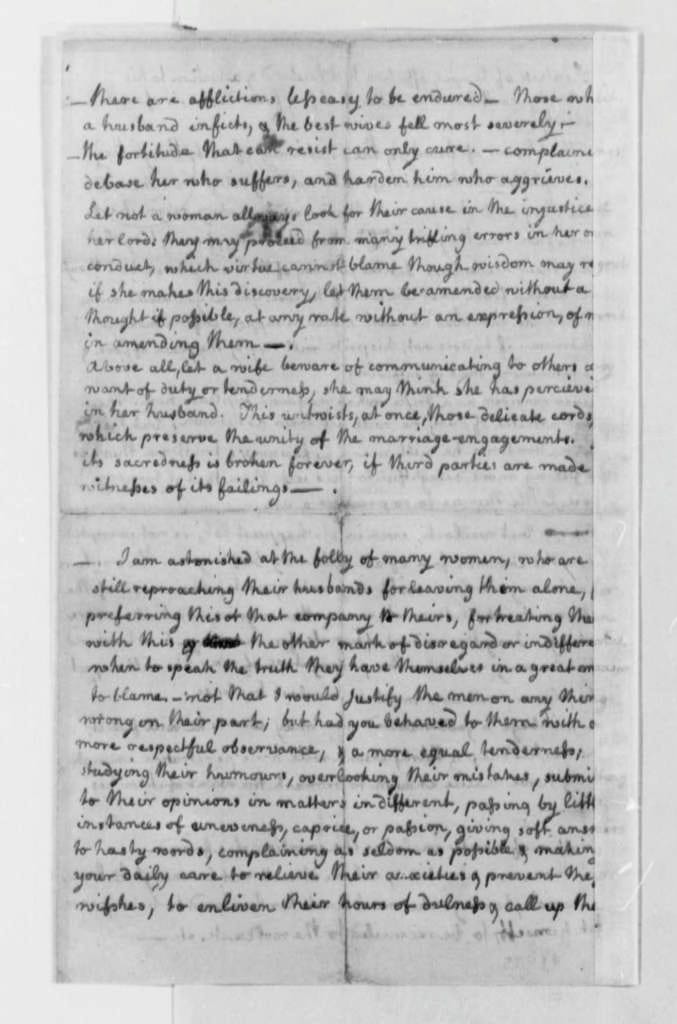
What Jefferson never quite realized, though, is how much Patsy’s time in the convent school had changed her.
I am now tempted to go to Monticello and do a deep dive into the letters that Patsy received from her convent friends — we still have those! As always, I’d love to hear your thoughts.
As always, thanks for reading,
~Leah
You can read Patsy’s letter to Eliza House Trist here: https://founders.archives.gov/documents/Jefferson/01-08-02-0337. I added the italics in the quote.
I won’t go into what he says here. I don’t think you’ll like it very much.
Beautifully written and with interesting insights. Would love to see what you come up with at lovely Monticello. A privilege to read these essays, and look forward to your new book.
This is so coooool!!!